How garages get found on Google, and why the map decides most of it
Where a UK garage's bookings come from: the map with 3 garages on it for MOTs and servicing, organic results for the expensive jobs, and what decides each.
By Daniel Stoychev, Webso Digital · 29 August 2026 · 7 min read
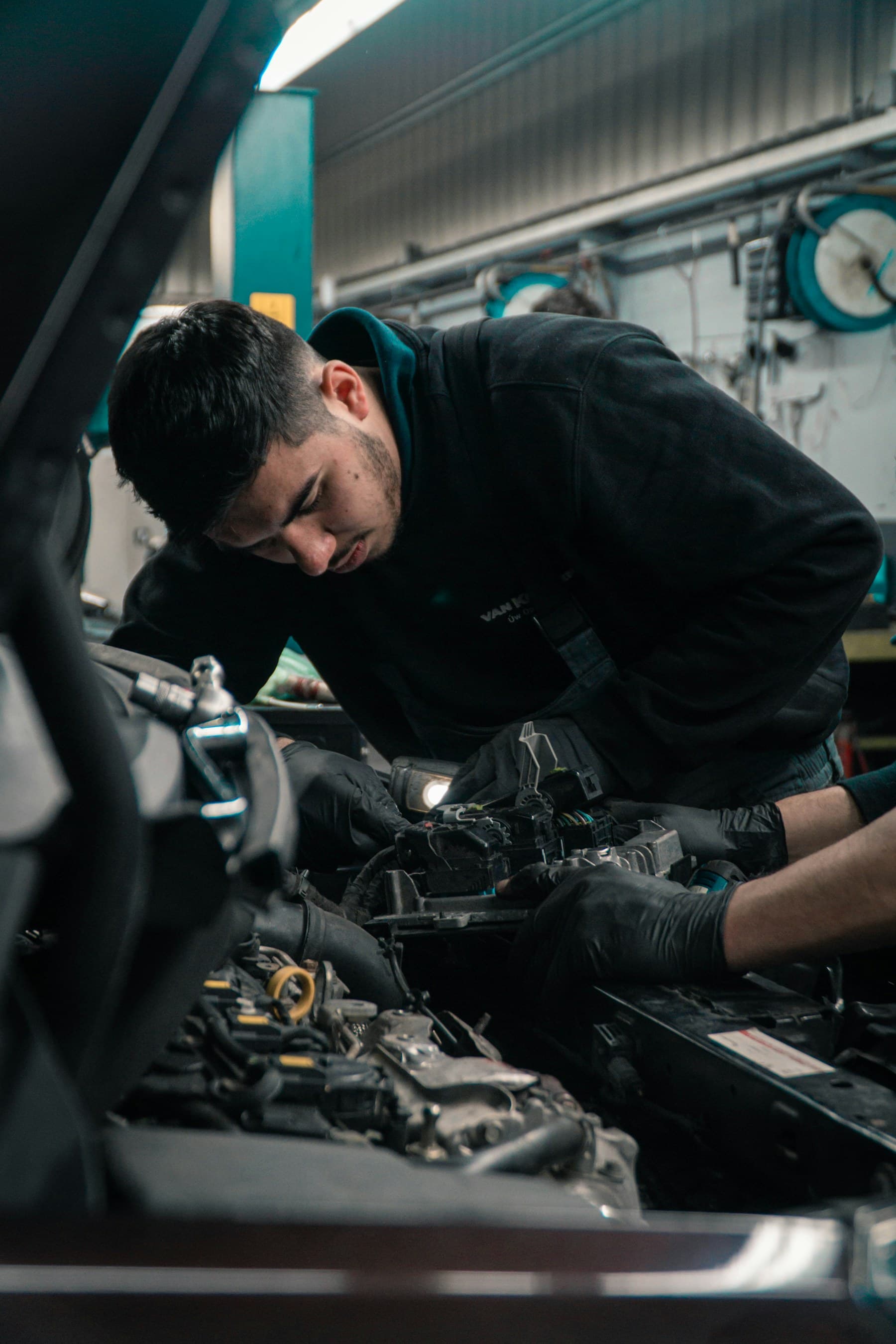
A driver who needs an MOT, a service or a diagnosis searches on a phone, looks at the map with three garages under it, and books one of them. That map is decided almost entirely by your Google Business Profile: category, distance, whether you are open now, and reviews. The expensive jobs, a clutch, a gearbox, a timing belt, a remap, are searched differently: the driver reads, compares and rings the garage whose page explained the job. Two doors, two different ways in.
What the driver actually sees
Search "MOT near me" or "garage Wrexham" on a phone. A couple of adverts, then a map with three garages and their ratings, then a list that usually starts with a booking platform or a comparison site before any garage's own website appears. On a phone the map is the whole first screen. For the routine work, the MOT, the service, the tyres, the driver rarely scrolls past it. Whoever is in those three slots with a decent rating and an "Open" label gets the booking.
The three garages in the map are chosen by profile signals. The 2026 industry survey of local ranking factors put the primary category first, distance second, the words in the business name third, and "open at the time of search" fifth, ahead of most things people spend money on. Reviews count, review recency counts, and whether the profile's services and hours are filled in counts more than it did last year. The website is a supporting act for this door.
Where the expensive jobs come from
A clutch on a Golf, a DPF that keeps regenerating, a gearbox that will not select third, a remap on a van: these are searched by the job and often by the make. "DPF cleaning Chester", "clutch replacement cost Ford Focus", "Stage 1 remap Cheshire". The driver has a day or two, reads what comes back, and calls the garage that sounded like it had done this a hundred times. That search is won by a page, not a profile: one that names the job, the area, what is involved, what changes the price, and how long the car is off the road.
Most garages never build those pages, because the website was a one-off from a designer who did not know what a DPF is. That is why the door is open. The garage that writes ten honest job pages in its own words, with its own photos, has almost no competition for them outside the big chains.
The lead sites and the booking platforms
BookMyGarage, WhoCanFixMyCar, Halfords and the chains rank well because they have spent years earning links. They send work, at a fee per booking or a monthly cost, and they list your competitors beside you with a price comparison. Useful for filling quiet days; expensive as the only door. Your profile and your pages are owned ground, and they keep working when you stop paying the platforms.
The order that works
- Fix the Google Business Profile: primary category "Auto repair shop" or "MOT station" as appropriate, every service ticked, exact hours including Saturday, a review routine that runs at the desk, photos of the actual workshop.
- Make the site fast, indexable and specific: a page for each job you want more of, with the area named and the questions answered.
- Earn mentions: the DVSA test station listing, manufacturer or parts-supplier garage finders, local directories that are maintained, the local paper if there is a story.
- Measure in Search Console, which is free, and count where each booking came from for a month.
Search your own garage name and your town on a phone in a private window. If you are not in the map for "MOT" plus your town, that is the first job, and it usually takes an afternoon to fix the profile and a few months for the reviews to catch up.
How long it takes
Profile fixes register within a couple of weeks. Reviews compound over months. New job pages take three to six months to settle. We have seen a new garage site enter the map pack within five weeks of launch, and the same site still sitting at position eleven for its competitive search two months later. Both are normal. Anyone promising the first page in a month is describing a search nobody makes.
Questions on this topic
Does a garage need a website if it has a good Google profile?
For MOTs and servicing, the profile does most of the work and a simple site is enough. For clutches, gearboxes, diagnostics and remaps, drivers research before they ring, and that research happens on pages. A profile with no site behind it also converts worse.
Do BookMyGarage or WhoCanFixMyCar help my Google ranking?
Indirectly: a consistent listing on them is a citation and they collect reviews. They do not pass ranking power to your site, and they compete with it on the same page. Keep the ones that pay for themselves.
How many reviews does a garage need for the map pack?
Enough to be in the range of the three garages already there. In most UK towns that is somewhere between fifty and two hundred, which sounds like a lot until you count how many cars you see a week. A steady flow from the desk gets there.
Can I do this myself?
The profile, yes, with a checklist and the discipline to keep it up. The pages need writing by someone who knows the trade and the searches, and the mentions need chasing every month. The garages who do it themselves usually do the profile once, well, and then never touch it again.